Hanging Heavy Wall Art: Anchor and Weight Checklist
By Marta Ellison · Published · 3 min read

A large framed print or mirror looks simple on the wall, but the load behind it is not. A 90 x 120 cm frame with glass can weigh 15–30 kg, and that weight hangs on two small points. Getting it wrong usually means a cracked frame, a patched wall, or worse.
This checklist walks through what to check before you drill: what the wall is made of, which anchor suits the load, how far apart to space the hooks, and the small details that keep a heavy piece level for years.
Weigh the Piece, Then Add a Margin
Put the item on a bathroom scale before you shop for hardware. A wooden frame with acrylic glazing runs roughly 4–8 kg per square metre; add glass and it climbs to 10–15 kg per square metre. A 1 m² piece with glass plus a 3 kg mirror or canvas can easily reach 18 kg.
Then add a safety margin. Choose hardware rated for at least 1.5 times the actual weight, and 2 times if children, pets, or doors nearby can bump the wall. Two hooks share the load, but rarely evenly: assume one hook carries 60–70% of the total. That is why two 10 kg hooks are not the same as one 20 kg anchor.
- Weigh the frame on a scale, do not guess
- Add 50–100% as a safety factor
- Assume one of two hooks takes most of the load
Identify the Wall Before You Drill
Tap the wall and listen. A hollow, drum-like sound usually means drywall over studs; a dull thud suggests masonry. A magnet finds screws in drywall; a stud finder confirms stud centres, typically 40 or 60 cm apart in modern framing. Mark stud edges with pencil, not tape, which shifts.
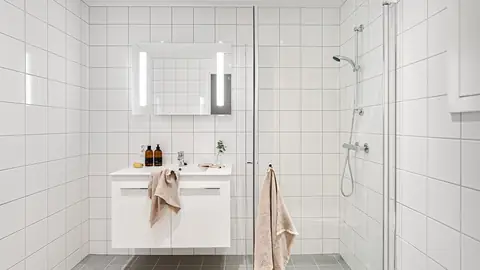
For masonry, a small test hole with a 6 mm bit tells you whether you have brick, block, or plaster over something softer. Old plaster on lath crumbles around anchors, so treat it as a weak layer: the fastener must reach the solid material behind. If the wall is tiled, drill through grout lines with a tile bit and avoid hammer mode until you are past the glaze. See what size drill bit for wall anchors for a matching chart.
Pick the Right Anchor for the Load
Light pieces under about 5 kg can hang on a hardened steel nail or a small self-drilling anchor in drywall. From 5 to 15 kg, use a quality expanding plastic anchor or a metal self-drilling toggle in drywall; in masonry, a nylon plug with a screw works well. Above 15 kg, go into studs or use heavy-duty toggle bolts rated for the load.
Snap toggles are the strongest option in hollow drywall, often rated 25–45 kg each in 12.5 mm board, but they need a 12–16 mm hole and leave a large patch if removed. Sleeve anchors suit brick and concrete. Never rely on the plastic plug that came free with the frame; those are usually rated for 2–4 kg.
- Under 5 kg: nail or small self-drilling anchor
- 5–15 kg: expanding anchor or toggle in drywall
- Over 15 kg: studs or heavy-duty toggle bolts
- Masonry: nylon plug or sleeve anchor, never a drywall toggle
| Anchor type | Typical safe load | Best wall | Hole size | Removal patch |
|---|---|---|---|---|
| Hardened steel picture nail | 2–5 kg | Drywall, plaster | None | Small |
| Plastic expanding plug | 5–10 kg | Masonry, block | 6–8 mm | Small |
| Self-drilling drywall anchor | 8–15 kg | Drywall | None (self-drill) | Medium |
| Metal toggle bolt | 20–35 kg | Drywall, hollow | 10–12 mm | Large |
| Snap toggle | 25–45 kg | Drywall | 12–16 mm | Large |
| Sleeve anchor | 30–60 kg | Brick, concrete | 8–10 mm | Medium |
Space Hooks and Set the Height
Most frames come with two D-rings or a wire. With D-rings, place hooks so the cords form a V of roughly 60 degrees; wider spacing spreads the load and keeps the frame from tilting. With picture wire, use two hooks rather than one, and keep the wire taut. A single central hook on a wide frame will let it lean.
Eye level is a common rule: centre of the artwork at about 145–155 cm from the floor, or 15–25 cm above furniture. For a sofa, the bottom edge often sits 20–25 cm above the back. Measure from the hook, not the frame top, and check with a spirit level before committing.
Drill, Fix, and Test
Use a bit matched to the anchor, usually 1 mm larger than the plug's stated diameter for masonry and the exact size for toggles. Drill slightly deeper than the anchor length, clear dust with a vacuum or blow-out, and seat the anchor flush. Over-tightening is the most common failure: plastic plugs spin and crumble, toggles crush drywall paper.
Before hanging, load-test each fixing with a firm downward pull of 10–15 kg for a few seconds. Then hang the piece and leave it a day before adding anything below it. If you are also finishing a room, the paint estimate guide helps you plan touch-ups around new holes.
When the Wall Will Not Hold
Some walls resist anchors: plaster on lath, thin 9.5 mm drywall, or walls with pipes and cables close to the surface. In those cases, bridge the load with a French cleat screwed into two studs, or stand the piece on a picture ledge. A cleat spreads weight along its length and is far more forgiving than two point fixings.
If you are mid-renovation, plan hanging points before tiling or painting. In a bathroom, moisture weakens drywall and cheap anchors; use stainless fixings and avoid drilling into waterproofing. For bigger projects, the 2025 bathroom remodel cost guide shows where fixing choices fit the budget.
- Weigh the piece and size hardware for 1.5–2 times that load
- Identify the wall material before choosing an anchor
- Use studs or heavy-duty toggles above roughly 15 kg
- Space two hooks widely and check level before the final tighten
Marta has spent years collecting practical, tested answers to everyday home repair questions. She focuses on clear measurements, realistic budgets, and avoiding common DIY mistakes. Her writing favors checklists and numbers over vague advice.